

『Flow Meter Coffee Machine Repair: Fixing Volumetric Dosing and Water Supply Failures』Related information(clamp on meter|electromagnetic meter|venturi meterrotameter|orifice meter|ultrasonic flow meter|mass flow meter|coriolis mass flow meter|coriolis flow meter|magnetic flow meter|magmeter flow meter|magflow flow meter|mag meter flow meter|electromagnetic flow meter|vortex flow meter|turbine flow meter|thermal mass flow meter|thermal flow meter|rotameter flow meter)
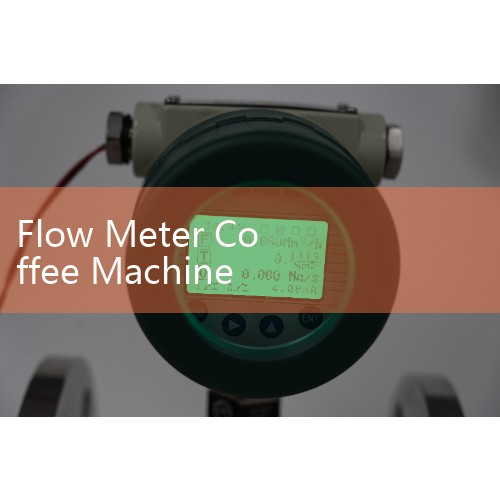
Flow Meter Coffee Machine Repair: Fixing Volumetric Dosing and Water Supply Failures
Quick Answer: Most coffee machine volumetric dosing failures are not caused by a bad flow meter at the start. Air bubbles, low inlet pressure, a clogged filter, or a broken pulse cable cause many repeat failures. Check the pulse output first, purge the air, clean the meter chamber, then verify the water pressure at the meter inlet.
What Actually Breaks in a Coffee Machine Flow Meter
A coffee machine flow meter sits between the pump and the group head or boiler. It sends a pulse signal to the control board. The board subtracts pulses until the target volume is reached. For espresso shot dosing of 30 to 40 ml, a small oval gear meter with a 0.3 to 2 L/min flow range is common. For bulk brew of 250 to 500 ml per cycle, the flow rate may reach 4 to 6 L/min.
We have seen a cafe chain in Vietnam where shot volume drifted from 38 ml to 27 ml over four days. The flow meter rotor was not worn. The real problem was a small air leak at the push fit fitting before the meter. Air bubbles compress in the pump and create false pulse counts. The control board then stops the shot early.
Most engineers skip the air leak test because the fittings look dry. A small leak can pull air in without water dripping out. If the shot volume changes from 40 ml to 31 ml, suspect air before you replace the flow meter.
Water Supply Failures That Hide as Flow Meter Faults
Before you replace the flow meter, check the water supply. A coil of scale inside the inlet solenoid can drop pressure from 4 bar to 1.2 bar. A partially blocked 50 micron filter can reduce flow from 2.5 L/min to 0.8 L/min. The flow meter may still send pulses, but the dose time becomes long. The coffee flavor changes. The technician often blames the flow meter first.
In a food processing plant in Saudi Arabia, a dosing skid used an electromagnetic flow meter DN15. The control system showed 0.5 L/min but the actual water flow was 0.1 L/min. The water conductivity was 280 µS/cm. The meter was not faulty. The problem was poor grounding and a dirty pre filter. The meter needed a stable grounding electrode and a new inlet filter.
Step by Step Checks for Volumetric Dosing Failure
Start with the pulse output. Disconnect the signal cable at the control board. Measure voltage across the pulse wire and ground. Run water through the meter or rotate the impeller by hand. You should see a clean square wave or a clear voltage drop. On many coffee machines the supply is 5 V DC. Some industrial coffee systems use 24 V DC with 4 to 20 mA HART output.
Then purge air from the line. Run the pump for 10 seconds with the group handle removed. Let water flow until no air bubbles appear in the drain line. Check the inlet filter and O ring. A flat O ring lets air into the line before the meter. Replace it. Then clean the meter chamber with citric acid solution if scale is present. Do not use a wire brush inside an oval gear meter chamber.
Check the water inlet pressure with a 0 to 10 bar pressure transmitter. At the meter inlet you want 2 bar to 8 bar for most coffee machines. If the pressure drops below 1.5 bar during a shot, the problem is upstream. Check the pump, the water softener, the pre filter, and the water line from the mains.
Flow Meter Selection for Coffee Machine Repair and Dosing Skids
Silver Automation Instruments supplies flow meters that fit coffee machine OEM builds and repair work. For compact espresso machines, a small oval gear flow meter with G 1/8 or NPT 1/8 threads works well. Choose a flow range from 0.3 to 3 L/min and a pulse output of 400 to 1000 pulses per liter. For hot water dosing at 70 to 95 °C, use a meter body rated for 100 °C and an EPDM O ring instead of nitrile.
For larger central boilers and breakfast buffet coffee stations, an electromagnetic flow meter DN15 covers 0.5 to 20 L/min. It has no moving parts, so coffee fines and small scale flakes pass through without jamming the rotor. Ask for a ceramic liner and stainless steel electrodes. If the system includes a central syrup dosing line, a Coriolis mass flow meter gives direct mass output in kg/h. That works for chocolate syrup, milk concentrate, or flavored syrup. The viscosit
_600x400.jpg)
A practical replacement set looks like this. For a single group espresso machine use an oval gear meter with G 1/8 threads, 0.3 to 3 L/min range, 5 V DC pulse output, and a body rated for 100 °C. For a machine with two to four group heads use a DN15 electromagnetic flow meter with 0.5 to 25 L/min range, 4 to 20 mA output, and EPDM liner. For a central dosing skid that feeds multiple machines use a Coriolis mass flow meter with a 0 to 2 kg/min range and HART output.
Common Installation Mistakes That Cause Repeat Failures
Do not install an oval gear flow meter with the shaft vertical unless the manufacturer allows it. Most small dosing meters need the rotor shaft horizontal to avoid uneven wear. Do not use thread seal tape past the first two threads. A strip of PTFE tape can wrap around the rotor and stop the pulse signal. In practice, many repeat failures come from thread tape bits inside the meter body.
Before the meter, install a 100 micron stainless steel mesh screen. Coffee machine water often carries softened resin beads or scale flakes after a water softener service. Those particles lock an oval gear rotor in seconds. After an electromagnetic flow meter, keep a straight run of 5 pipe diameters. This keeps the flow profile stable and avoids unstable readings at 0.5 L/min.
Pressure and Temperature Matching
Water temperature in an espresso machine heat exchanger can reach 95 °C. The flow meter must handle that temperature without deforming the internal rotor. If the meter is installed on the cold water inlet before the pump, 40 °C is usually enough. If the meter is on the hot water outlet, use a meter rated for 120 °C. Pressure rating should be at least 10 bar for espresso machines. A 9 bar pump plus water hammer can spike to 14 bar. Do not use a plastic body flow meter with a pressure rating of 6 bar in this position.
Some coffee machines monitor water temperature with a PT100 sensor close to the flow meter. If the PT100 reading is slow, the control board may not switch the hot water valve at the right time. The dose can change even when the flow meter is healthy.
Get a Replacement Flow Meter for Coffee Machine Dosing
Tell us your flow range in L/min, pipe size in DN, water temperature in °C, and inlet pressure in bar. Mention the output signal your control board expects, such as pulse, 4 to 20 mA, or HART. We will recommend a flow meter that fits the repair without changing the pipe layout. Contact Silver Automation Instruments at Tel +86-25-68650347, Whatsapp +86-25-52155837, or WeChat +86 15365082610.
FAQ on Coffee Machine Flow Meter Repair
Q1: Why does my coffee machine dose too little water after a flow meter replacement?
A1: Check the pulse scaling. A new flow meter with 1000 pulses per liter may be wired into a board set for 600 pulses per liter. The machine stops the shot early. Change the K factor in the service menu.
Q2: Can I use an electromagnetic flow meter for a single group espresso machine?
A2: Yes, if the water conductivity is above 20 µS/cm and the flow rate is within the DN15 range. For very low flow around 0.3 L/min, an oval gear meter reads more stable pulses. An electromagnetic meter needs a stable grounding ring and no air bubbles.
Q3: What flow meter signal is most common in coffee machines?
A3: Pulse output is the most common. Many boards use a 5 V DC supply and count a square wave. Larger systems may use 4 to 20 mA HART or Modbus. Check the control board input before ordering.
Q4: How do I stop air bubbles from causing false dosing?
A4: Fix all push fit fittings before the meter. Replace flat O rings. Install the meter after the pump and after the flow restrictor if possible. Purge the line for 10 to 15 seconds after each filter change.
Q5: Does Silver Automation Instruments offer small flow meters for coffee machine repair?
A5: Yes. We supply small oval gear flow meters, DN15 electromagnetic flow meters, and Coriolis mass flow meters for food and beverage dosing. Send us your flow range, pipe thread type, and control output signal.
 Hot Product
 Related AD