

『Coal water slurry flowmeter』Related information(clamp on meter|electromagnetic meter|venturi meterrotameter|orifice meter|ultrasonic flow meter|mass flow meter|coriolis mass flow meter|coriolis flow meter|magnetic flow meter|magmeter flow meter|magflow flow meter|mag meter flow meter|electromagnetic flow meter|vortex flow meter|turbine flow meter|thermal mass flow meter|thermal flow meter|rotameter flow meter)

1. What are the installation requirements for electromagnetic flow meters?
The installation requirements for electromagnetic flow meters mainly include the following points:
1. In order to facilitate installation, maintenance, and upkeep, sufficient space should be reserved around the flow meter.
2. Avoid installing the flow meter in places with large temperature changes or high temperature radiation from equipment.
3. The flow meter should be installed indoors. If installed outdoors, direct sunlight should be avoided, and if necessary, sunscreen devices should be installed.
4. Avoid installing the flow meter in environments containing corrosive gases.
4. Avoid installing the flow meter in places with strong vibration sources and strong magnetic fields.
.2. Working principle of capacitance flowmeter
The capacitance flowmeter works based on the principle that fluid flow causes changes in capacitance value, and calculates the flow value by measuring the change in capacitance.
.1. Core Working Principle 1 The core component of a capacitive flowmeter with a capacitive sensing structure is one or more pairs of electrodes, installed on the inner wall of an insulated pipeline or inserted into the pipeline. The electrode and the fluid inside the pipeline (or the dedicated measuring pipe wall) form the two electrode plates of the capacitor, and the fluid itself or the medium inside the fluid serves as the dielectric of the capacitor
2. Flow capacitance conversion mechanism: When the fluid flows, its physical properties (such as concentration, density, dielectric constant) or flow state will change, resulting in a change in the capacitance value (C). The
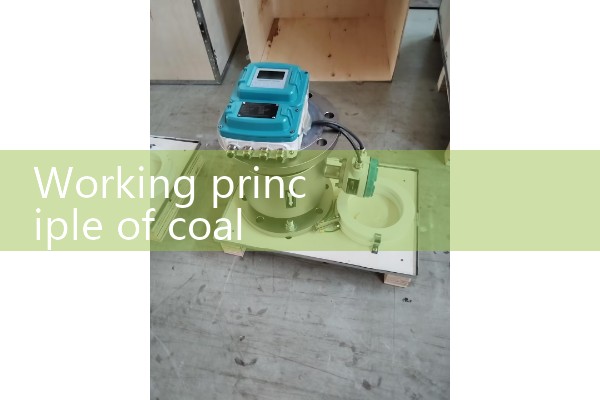
2. The main measurement types are divided into two categories based on the different measurement objects and methods.
1. Non conductive medium measurement is mainly used to measure non-conductive or low conductivity fluids such as oils, organic solvents, gases, etc.
. 2. Two phase flow measurement is used to measure gas-solid, liquid-solid, and other two-phase flows (such as coal powder and slurry). When a fluid containing solid particles flows through an electrode, changes in particle distribution and concentration can cause fluctuations in the equivalent dielectric constant. The flow rate or concentration of the solid phase can be calculated by detecting the fluctuation signal of the capacitance value.III. System Composition A complete capacitive flowmeter system usually includes: • Capacitive sensor: the electrode part in direct contact with the fluid.
. Signal converter: Convert small changes in capacitance (Δ C) into standard electrical signals (such as 4-20mA, pulse, or digital signals). • Processor and display: perform signal processing, calculation, display, and output.4. Key Features 1 Advantages - Simple structure, no moving parts, high reliability, and low pressure loss. -Suitable for measuring high-pressure, high-temperature, and
 Hot Product
 Related AD