

『Flow Meter Installation in Pipe Lines: Best Orientations for Horizontal and Vertical Feeds』Related information(clamp on meter|electromagnetic meter|venturi meterrotameter|orifice meter|ultrasonic flow meter|mass flow meter|coriolis mass flow meter|coriolis flow meter|magnetic flow meter|magmeter flow meter|magflow flow meter|mag meter flow meter|electromagnetic flow meter|vortex flow meter|turbine flow meter|thermal mass flow meter|thermal flow meter|rotameter flow meter)
Flow Meter Installation in Pipe Lines: Best Orientations for Horizontal and Vertical Feeds
Quick Answer: For horizontal pipes, install electromagnetic, ultrasonic, and vortex meters with the sensing elements at the 3 o clock and 9 o clock positions. For vertical feeds, use upward flow only. A downward vertical line can drain and create air pockets that make the reading unstable.
We are Silver Automation Instruments. We supply flow meters and process instruments to oil and gas, water and wastewater, chemical, food and beverage, and marine customers. Our main markets include Southeast Asia, Oceania, Latin America, the Middle East, and Africa. The question of meter orientation comes up often. In practice, most engineers skip this part during design and fix it after start up. That delay can cost a whole batch in a food plant or a custody transfer error in a fuel terminal.
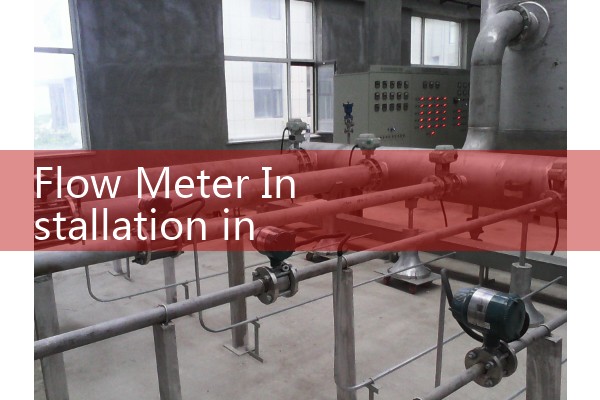
Last year a customer in Vietnam asked us about a DN50 electromagnetic flow meter on a horizontal line. The sensor was installed with electrodes at the top. Every time a small air pocket passed, the converter showed a full scale spike. We told him to rotate the sensor 90 degrees so the electrodes were horizontal. The reading returned to normal. The pipe was unchanged. Only the meter orientation changed.
Horizontal Pipe Installation
For horizontal pipelines, the best orientation for an electromagnetic flow meter depends on where the electrodes are mounted. In clean water and wastewater, keep the electrodes at the 3 o clock and 9 o clock positions. This prevents air from sitting on the electrodes and prevents sludge from coating the bottom. If the line is only partially full, the meter will not read correctly. The pipe must stay completely full at all times.
For vortex flow meters on horizontal steam lines, install the meter with the bluff body in the lower half of the pipe if wet steam is possible. For dry steam and gas, the standard horizontal position works. Keep the flow direction arrow aligned with the pipe. A customer in Thailand once installed a vortex meter backwards on a DN150 steam line. The converter displayed zero flow. So we told him to flip the meter 180 degrees. The reading matched the plant boiler output.
Vertical Pipe Installation
Vertical feeds are simpler for many meter types if you follow one rule. Install the meter on an upward flow line. A downward line can drain, trap air, or create a siphon effect. This is especially true for electromagnetic, ultrasonic, thermal mass, and Coriolis meters.
For a Coriolis mass flow meter on a vertical line, mount the sensor in the upward direction. This keeps the tubes full even at zero flow. Downward flow can let the tubes empty and cause a false zero or a negative reading. We have seen this on customer sites many times in chemical batching systems. A paint manufacturer in Southeast Asia had a Coriolis meter on a downward feed from a day tank. The batch weight shifted after the pump stopped. We moved the meter to the discharge line after the pump with upward flow. The batch weight stayed stable.
Meter Type Specific Notes
Electromagnetic flow meters need the pipe full and the fluid conductivity above 5 µS/cm for many models. Use a vertical upward installation for slurries and sludges. For horizontal lines use the 3 o clock and 9 o clock electrode position. Avoid installing the meter at the highest point of a line because air collects there.
Ultrasonic clamp-on meters follow a similar rule. For horizontal pipes, mount the transducers at the 3 o clock and 9 o clock positi
Oval gear flow meters are positive displacement units. They need clean liquid and no air. Install them on horizontal pipes with the gears in the horizontal plane. For vertical lines, install only on upward flow and add a strainer upstream. Use them for diesel, heavy fuel oil, lubricating oil, and food oils. A diesel distributor in Honduras asked us for an oval gear flow meter on a vertical drop to a filling nozzle. We rejected that layout. The meter would lose prime. We supplied a horizontal bypass line instead.
Thermal mass flow meters work well on vertical upward lines for compressed air, nitrogen, and biogas. A downward line can give a false low reading because the sensor may not see the full pipe velocity profile. Keep the flow conditioning straight run at least 15 diameters upstream and 10 diameters downstream. For biogas with moisture, install the meter on a vertical upward line after a condensate trap.
Straight Run and Orientation Checklist
Most meter types need straight run before and after the meter. The exact value depends on the meter and the upstream disturbance. In practice, use 10 to 20 diameters upstream and 5 diameters downstream for electromagnetic and ultrasonic meters. For Coriolis meters, straight run is less important but orientation is critical. For vortex meters, use 15 diameters upstream and 5 diameters downstream when there is an elbow or control valve.
Here is the thing. The orientation rules do not replace a full pipe. The pipe must be full, the flow direction must match the arrow, and the meter must not sit at the high point of a system. Before you buy, send us these details. We will recommend a meter and an installation layout for your pipe run.
Send us your pressure (bar), temperature (°C), pipe size (DN), flow range, and process fluid. We can quote a meter with the correct liner, electrodes, process connection, and output. Tel: +86-25-68650347. Whatsapp: +86-25-52155837. WeChat: +86 15365082610.
FAQ
Q1: Can I install an electromagnetic flow meter on a horizontal pipe with electrodes at the top?
No. Air bubbles collect at the top and cause signal spikes. Rotate the meter so the electrodes are at 3 o clock and 9 o clock.
Q2: Should a vertical pipe flow meter be installed on upward or downward flow?
Use upward flow. Downward flow can drain the meter and create air pockets that cause unstable readings.
Q3: What is the minimum straight run for a vortex flow meter?
Use 15 pipe diameters upstream and 5 diameters downstream when the meter is after an elbow or valve. Add a flow conditioner if the run is shorter.
Q4: Can I install an oval gear flow meter on a vertical line?
Yes, but only on upward flow with a strainer upstream. The liquid must be clean and free of air. For diesel and oil, a horizontal position is better.
Q5: Why does my flow meter read zero on a downward line?
The pipe may not be full. The sensor may be exposed to air. Move the meter to a vertical upward section or add a back pressure valve downstream.
 Hot News
 Related AD