

『Flow Meter Water Timer Configuration: Automating Smart Zone Irrigation Schedules for Water Conservation』Related information(clamp on meter|electromagnetic meter|venturi meterrotameter|orifice meter|ultrasonic flow meter|mass flow meter|coriolis mass flow meter|coriolis flow meter|magnetic flow meter|magmeter flow meter|magflow flow meter|mag meter flow meter|electromagnetic flow meter|vortex flow meter|turbine flow meter|thermal mass flow meter|thermal flow meter|rotameter flow meter)
Flow Meter Water Timer Configuration: Automating Smart Zone Irrigation Schedules for Water Conservation
Quick Answer: Flow meter water timer configuration connects a flow meter pulse or 4-20 mA output to an irrigation controller. The timer then starts, stops, or advances zones based on real flow. This method cuts water use by 15 to 35 percent on farms, parks, and commercial landscapes.
Why Flow Meter Data Changes Irrigation Schedules
Standard irrigation timers run on time only. A zone can stay open while a pipe is broken, a filter clogs, or a pump runs dry. Time based control wastes water. A flow meter water timer configuration closes this gap. The meter sends a pulse for every 10 liters or 100 liters. The timer counts pulses. When flow in a zone falls below a set threshold, the controller skips to the next zone. When flow is too high, the controller shuts the zone and can raise an alarm.
We have seen this on many customer sites. One landscaping contractor in the UAE cut pump runtime by 22 percent after installing two electromagnetic flow meters on a DN80 mainline. The timer used pulse outputs to stop zones when flow dropped 12 percent below the expected value.
Hardware Required for Smart Zone Control
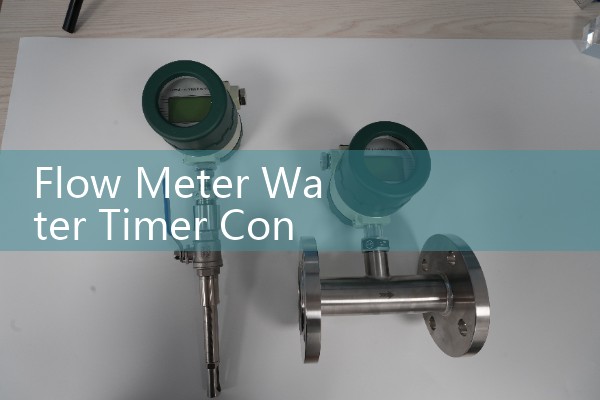
The basic system needs a flow meter with pulse output, an irrigation timer or PLC that accepts pulse or 4-20 mA input, and a solenoid valve or motorized valve per zone. Silver Instruments supplies electromagnetic flow meters from DN15 to DN300. For clean water lines, a DN25 to DN100 electromagnetic meter such as the Silver Instruments SIL-MAG 100 usually works. For larger mainlines, a DN150 or DN200 SIL-MAG 300 is common.
Some sites use ultrasonic clamp-on flow meters when pipe cutting is not allowed. A dairy farm in New Zealand uses a clamp-on meter on a DN100 polyethylene pipe. The pulse output feeds a timer that controls four zones. The install took one afternoon. No shutdown was needed.
Wiring the Flow Meter to the Irrigation Timer
Most Silver Instruments flow meters offer pulse, 4-20 mA, and Modbus RTU outputs. Pulse output is the easiest for irrigation timers. Wire the pulse terminal on the meter to the sensor input on the timer. Set the pulse scaling in the meter. A common setting is 1 pulse per 10 liters. In the timer menu, set the sensor type to pulse and the volume per pulse to 10 liters. Then set a flow window for each zone.
For 4-20 mA, wire the loop to a 24 V DC supply and the analog input of the controller. Scale 4 mA to zero flow and 20 mA to the maximum flow. For a DN80 meter with 0 to 80 m3/h range, 4 mA means 0 m3/h and 20 mA means 80 m3/h. The timer then reads live flow. Modbus RTU gives more data. Use RS485 and set the slave ID, baud rate, and register map in the controller. Some models also provide 4-20 mA HART output for sites that need process diagnostics.
Step by Step Configuration Without Guesswork
First, measure the normal flow for each zone. Run one zone manually and record the flow. Do this for every zone. Second, set the expected flow window in the timer. If a zone normally uses 12 m3/h, set a low cut at 9 m3/h and a high cut at 15 m3/h. Third, assign a delay time of 5 to 10 seconds. A 10 second delay avoids false trips from pressure changes. Fourth, test each zone with valves open and closed. Fifth, save the schedule.
Here is the thing. Many engineers install the flow meter and leave the timer at default settings. Then the system does not save water because the timer never reacts to real flow. Use the flow window. That is the main reason for a flow meter water timer configuration.
Smart Zone Scheduling Logic That Saves Water
Time based scheduling with flow alarm limits is the first method. Each zone runs for a fixed time. The meter checks that the zone is using water inside a set band. If flow falls outside the band, the zone stops. This protects pumps and pr
Volume based control works better for water conservation. It does not care how long the zone runs. It only cares how much water reaches the zone. This is useful for variable pressure sites. A customer in Chile uses this on a 6 zone avocado orchard. He sets 8 m3 per zone and the timer advances only after the target volume is reached.
Typical Applications and Results
A date palm farm in Saudi Arabia installed DN50 electromagnetic flow meters on three main lines. The timer uses pulse input to stop zones when flow drops 15 percent below normal. Water use fell 18 percent in the first quarter. A tomato grower in Mexico uses a 4-20 mA signal to a PLC. The PLC controls 12 solenoid valves. The system shuts the pump when total flow drops below 3 m3/h. This protects the bore pump and reduces manual checks.
In Australia, a council parks team uses an ultrasonic flow meter with Modbus RTU on recycled water. Recycled water can have low conductivity. They needed a meter that does not depend on conductivity. The meter sends data to a central timer. The team adjusts zones based on actual flow data from last season.
How to Select the Right Flow Meter for Irrigation Timers
Start with pipe size. For DN15 to DN50, a Silver Instruments SIL-MAG 100 electromagnetic flow meter works if the water has enough conductivity. Most bore water and city water range from 200 to 1500 µS/cm. For very clean rainwater or reverse osmosis water, use a Silver Instruments SIL-US ultrasonic flow meter. For DN80 to DN300 mainlines, the SIL-MAG 300 electromagnetic flow meter is common. For temporary or retrofit sites, a SIL-US clamp-on ultrasonic meter avoids pipe cutting.
Then define the output. Pulse output is enough for basic zone start and stop. 4-20 mA is better for live flow display and pump protection. Modbus RTU is best for central control and data logging. We also supply pressure transmitters with 4-20 mA output. A pressure signal helps the timer confirm that a pump is running and valves are opening correctly.
FAQ
Can I connect a flow meter directly to a standard irrigation timer?
Many standard timers accept a rain sensor input or pulse input. Check the timer terminal label. If the timer only has 24 V AC zone outputs, you may need a small pulse converter or PLC.
What pipe size should I use for a 4 zone drip system?
For small drip systems with 4 to 6 zones, DN25 to DN50 is typical. Send us the pump flow rate and zone flow rate. We will confirm the size.
How does a flow meter help stop a broken pipe?
The timer compares real flow against a set window. A broken pipe creates high flow. The timer stops the zone or pump when the flow exceeds the high limit for longer than the delay time.
Can I use this with recycled water or low conductivity water?
Yes. An ultrasonic flow meter works well with low conductivity water. An electromagnetic flow meter needs a minimum conductivity of about 20 µS/cm.
Which output is best for water conservation scheduling?
Pulse output is the most common. It connects easily to timers and has a direct volume per pulse setting. 4-20 mA and Modbus RTU add live flow and diagnostics.
Contact Silver Automation Instruments
Send us your pipe size (DN), pressure (bar), temperature (°C), flow range (m3/h), and timer brand. We will recommend a flow meter and pulse or analog output setup for your smart zone irrigation project. Our sales engineers reply within 24 hours.
Tel: +86-25-68650347. Whatsapp: +86-25-52155837. WeChat: +86 15365082610.
 Hot Blog
 Related AD