

『Vortex Mass Flow Meter: Integrated Pressure and Temperature Mass Probes』Related information(clamp on meter|electromagnetic meter|venturi meterrotameter|orifice meter|ultrasonic flow meter|mass flow meter|coriolis mass flow meter|coriolis flow meter|magnetic flow meter|magmeter flow meter|magflow flow meter|mag meter flow meter|electromagnetic flow meter|vortex flow meter|turbine flow meter|thermal mass flow meter|thermal flow meter|rotameter flow meter)
Vortex Mass Flow Meter: Integrated Pressure and Temperature Mass Probes
Quick Answer: A vortex mass flow meter with integrated pressure and temperature mass probes outputs direct mass flow for steam, compressed air, and gas lines. It removes the need for a separate flow computer and multiple transmitters. Silver Automation Instruments supplies these meters from DN15 to DN300 with 4-20 mA HART, pulse, and RS485 outputs.
Most standard vortex meters measure volumetric flow only. That is fine for liquids because liquid density does not change much in a given batch. But steam and gas density moves with pressure and temperature. Without compensation you get a number that looks correct but is not mass flow.
Some vendors call the combined pressure and temperature sensors mass probes. The concept is simple. The meter corrects density and reports mass flow directly. Here is the thing. A saturated steam line at 8 bar has a different density than a line at 10 bar. The same velocity can mean two different mass flow rates. Plant engineers need kg/h or lb/h for billing, boiler efficiency, and process control.
How Integrated Pressure and Temperature Mass Probes Work
The meter body contains a bluff body and a piezoelectric sensor. The sensor detects vortex shedding frequency. A built-in PT100 probe measures process temperature. A solid state pressure sensor measures line pressure. The electronics use these three inputs to calculate density and output mass flow directly.
No external flow computer is required. You wire one device instead of three or four. This reduces junction boxes, cable trays, and potential wiring mistakes. In practice, most startup delays come from wrong wiring between separate flow computers and transmitters.
Silver Instruments calibrates the integrated probes on a flow bench before shipment. Each unit ships with a calibration certificate that lists the reference accuracy. The standard output is a single 4-20 mA HART loop for mass flow. A pulse output and RS485 Modbus are included on most models.
Common Applications
We see these meters used in boiler steam outlets, compressed air headers, and natural gas branch lines. A palm oil refinery in Indonesia ordered a DN80 unit for saturated steam at 9 bar. They wanted mass flow in kg/h for energy monitoring. The integrated probes saved them from installing separate RTDs, pressure transmitters, and a flow computer.
In New Zealand a dairy processing site uses a DN50 meter on a compressed air line at 7 bar. The reading goes to a PLC via RS485. They track specific energy use per tonne of product. Because the meter outputs mass flow directly, the PLC logic stays simple.
Key Specifications to Specify
When you request a quote, include fluid type, pipe size, pressure, temperature, and flow range. A typical natural gas meter might be DN50, ANSI 150 flange, 4 bar, 25 °C, and 10 to 200 m3/h normal. A steam meter might be DN80, PN40 flange, 10 bar, 185 °C saturated steam, and 500 to 5000 kg/h.
Standard bodies are 316L stainless steel. Process connections can be wafer style or flanged. Flange options include ANSI 150, ANSI 300, DIN PN16, and DIN PN40. Operating temperature for standard sensors is up to 250 °C. High temperature versions can go to 350 °C. Pressure rating is up to 40 bar depending on si
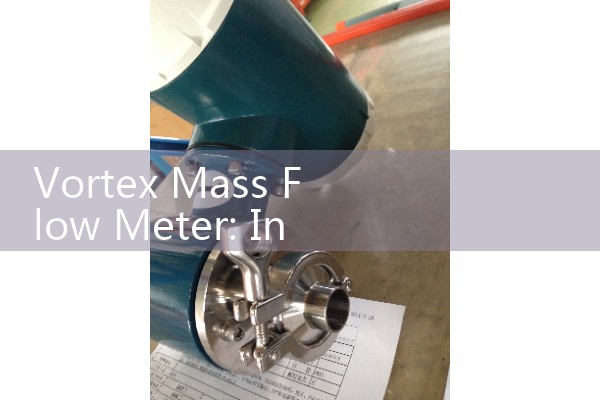
Accuracy for gas and steam mass flow is typically ±1.0 percent of rate when the Reynolds number is within the specified range. For liquids the accuracy is typically ±0.75 percent of rate. Repeatability is ±0.2 percent. These numbers cover the integrated mass flow output after pressure and temperature compensation.
Installation Notes
Vortex meters need straight pipe upstream and downstream. For a DN50 meter, keep at least 15D straight run upstream and 5D downstream. Install the meter after a strainer if the fluid contains particles. Avoid installing directly downstream of control valves or elbows.
For steam service, mount the meter with proper condensate management. The integrated pressure probe should not see trapped condensate in all cases. If wet steam is expected, use a meter with a drain hole or install a steam trap upstream. We have seen this on customer sites many times. A DN100 steam meter installed after a control valve showed unstable readings at low flow ranges. The issue was not the meter. It was the short straight run and wet steam.
FAQ
Q: Can this meter measure mass flow of liquids directly?
A: Yes but it is usually not needed. Liquid density changes are small. The meter can still calculate mass flow if you enter a fixed density value. The integrated pressure and temperature inputs are mainly used for gas and steam.
Q: Does this meter replace a separate flow computer?
A: Yes. The built-in electronics calculate density and mass flow. You still need a display or PLC to read the output but not a dedicated flow computer.
Q: What certifications are available?
A: Standard units are for safe areas. ATEX Zone 1 and Zone 2 versions are available for gas and dust environments. You can also request IECEx if your site is in Australia, Southeast Asia, or the Middle East.
Q: Can I use one meter for bidirectional flow measurement?
A: Some models support forward and reverse flow measurement but accuracy in reverse flow is often specified separately. Tell us during quoting if bidirectional flow is needed.
Q: How do I get a price and lead time?
A: Send us your fluid, pressure in bar, temperature in °C, pipe size DN, flow range, and flange standard. We will reply with a quote and estimated shipping date.
Ordering and Contact
Tell us the application and we will recommend a model with the right sensor, flange, and probe configuration. Vortex meter price depends on DN size, flange rating, probe options, and certification. A DN50 meter with integrated probes costs more than a standard vortex meter but less than buying separate transmitters and a flow computer.
As a flow meter manufacturer and supplier, we support end users and distributors across Southeast Asia, Oceania, Latin America, Africa, and the Middle East. Send us your pressure in bar, temperature in °C, pipe size DN, and flow range. That is enough for a first quote. For hazardous areas, include the zone classification and gas group.
Contact Silver Automation Instruments at Tel: +86-135-1213-1526. WhatsApp: 86-135-12131526. WeChat: +86 13512131526. You can also send your specification through the form on flow-meter.com.au. We support English, Spanish, and Chinese technical communication.
 Hot Blog
 Related AD