

『2 Inch Flow Meter: Mechanical and Digital Inline Models』Related information(clamp on meter|electromagnetic meter|venturi meterrotameter|orifice meter|ultrasonic flow meter|mass flow meter|coriolis mass flow meter|coriolis flow meter|magnetic flow meter|magmeter flow meter|magflow flow meter|mag meter flow meter|electromagnetic flow meter|vortex flow meter|turbine flow meter|thermal mass flow meter|thermal flow meter|rotameter flow meter)
Quick Answer: Why a 2-Inch Flow Meter Matters
For pipes with a nominal diameter of 2 inches (DN50), a 2-inch flow meter provides inline measurement without reducers. Mechanical models work best for clean, non-lubricating liquids and batch processes where power is not available. Digital models deliver 4-20 mA HART, pulse, or Modbus outputs and suit custody transfer, dosing, or remote monitoring across oil and gas, water treatment, and food plants.
2 Inch Flow Meter: Mechanical and Digital Inline Models
Silver Automation Instruments supplies 2-inch inline flow meters in both mechanical and digital versions. The core distinction is simple. Mechanical meters operate without external power and use a direct visual totalizer. Digital meters require 24 VDC or battery power and send signals to PLC or SCADA. Many engineers in Southeast Asia and the Middle East specify a 2-inch size because DN50 pipe is common for day tanks, boiler feed lines, chemical injection, and small transfer skids.
A 2-inch flow meter is not a one-size-fits-all device. The right choice depends on your fluid, pressure, temperature, and accuracy needs. We have seen customers buy a cheap mechanical turbine meter for raw water only to replace it months later when suspended solids jammed the rotor. So let’s break down exactly what mechanical and digital models offer, and where each one belongs.
Mechanical 2-Inch Flow Meters: Where Local Indication Wins
Mechanical inline meters for 2-inch lines often use oval gear, nutating disc, or turbine measuring principles. Oval gear meters dominate fuel and oil measurement because they handle viscosities from 0.5 cP to over 1000 cP and maintain ±0.5% accuracy across a wide turndown. A 2-inch oval gear meter typically covers 30 to 250 litres per minute for diesel, lube oil, or even palm oil. One of our Malaysian food customers runs a 2-inch oval gear meter on a palm olein transfer line at 80°C, and after three years the gears show negligible wear because the fluid is self-lubricating.
Nutating disc meters are another mechanical option for water and chemicals. A 2-inch model can measure from 20 to 200 litres per minute. These are common in building water sub-metering across Australia and in Latin America. They come with a pulse output option so the mechanical register can still feed a remote totalizer. If the liquid is clean and non-abrasive, a nutating disc meter will last a decade with little attention.
Turbine meters in 2-inch size suit low-viscosity fluids like gasoline, condensate, or demineralized water. Because the rotor spins on bearings, suspended particles and high viscosity shorten life. A 2-inch turbine meter with a PT100 temperature sensor can give you temperature-compensated volume, which is useful in fuel depots where product temperature changes between day and night.
One thing many engineers skip: mechanical meters almost always need a strainer or filter upstream. A 200-micron mesh is typical for turbine and oval gear meters. Without it, swarf or pipe scale will destroy the measuring element. A paint manufacturer in Thailand called us last year after a mechanical meter failed within two months. We asked about the strainer, and they admitted the installer omitted it. Lesson learned.
Send us your fluid type, flow range in litres per minute, and pipe size. We will recommend a mechanical meter and the matching strainer: [email protected] or Tel: +86-135-1213-1526. Our WhatsApp is 86-135-12131526, and WeChat: +86 13512131526.
Digital 2-Inch Flow Meters: When Accuracy and Data Matter
Digital inline models cover electromagnetic, Coriolis, ultrasonic, and digital-display turbine meters. Electromagnetic flow meters for 2-inch lines dominate raw water, wastewater, and chemical applications because they have no moving parts and measure liquids with conductivity as low as 5 µS/cm. Silver Instruments supplies a 2-inch electromagnetic flowmeter with a PTFE liner and 316L electrodes that handles temperatures up to 120°C and pressures to 16 bar. It outputs 4-20 mA, pulse, and RS485 Modbus, so you can integrate it directly into a plant PLC or RTU. In practice, a 2-inch magmeter covers 5 to 250 litres per minute with ±0.5% accuracy.
Coriolis mass flow meters in 2-inch size measure mass flow, density, and temperature simultaneously. They are the first choice for LPG, ammonia, high-value solvents, and edible oil custody transfer. A 2-inch Coriolis meter can measure from 0 to 15,000 kg/h depending on density. Because Coriolis meters have no bearings or moving parts in the flow path, they tolerate entrained gas and dirty fluids better than mechanical meters. The trade-off is price and pressure drop across the tubes. Still, for a biodiesel plant in Argentina we supplied a 2-inch Coriolis meter, and it has been running 24/7 for four years with zero drift. The customer checks the meter factor once a year with a prover, and the deviation stays below 0.1%.
Digital inline ultrasonic flow
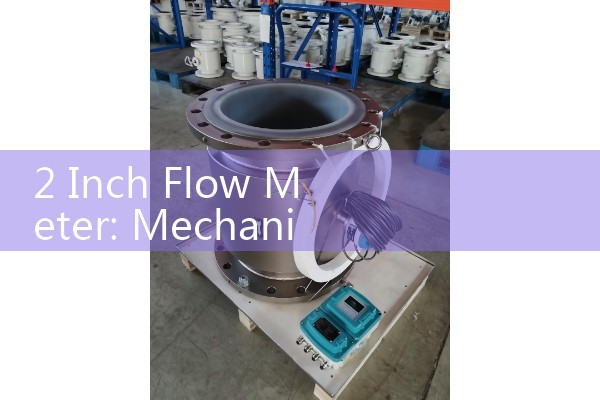
Here is the thing about digital meters: install them according to straight pipe run requirements. A 2-inch electromagnetic meter needs 5D upstream and 3D downstream for stable readings. We have seen on customer sites many times where an engineer placed a digital meter right after a partial-open gate valve, and the flow profile completely biased the measurement. Check the installation drawing before you order.
Tell us your pipe size (DN50), process fluid, required accuracy, and output signal. We will return a quote with the correct liner, electrode, or tube material. Reach us at [email protected], Tel: +86-135-1213-1526, WhatsApp: 86-135-12131526, WeChat: +86 13512131526.
Mechanical vs Digital 2-Inch Flow Meter: A Practical Comparison
Most engineers ask us: when should I spend more on a digital meter? The answer hinges on three factors. First, what accuracy does your process need? Mechanical oval gear meters give ±0.5% of reading, which is fine for internal consumption monitoring. For billing or custody transfer, digital Coriolis or magmeters offer ±0.2% to ±0.5% with documented linearity, and you get a certified calibration certificate traceable to NIST or equivalent. Second, do you need remote data? A mechanical meter with a reed switch pulse output can send a dry contact to a local totalizer, but a digital meter gives you 4-20 mA HART plus Modbus, which opens up SCADA, energy management, and IoT dashboards. Third, how dirty or viscous is your fluid? Mechanical meters struggle with particulates. Digital magmeters and Coriolis meters handle slurries and high-viscosity fluids with fewer headaches.
A sugar refinery in Guatemala approached us in 2023. They had been using a 2-inch mechanical turbine meter on molasses at 25°C. Molasses viscosity changes with temperature, and the turbine bearing wore out within six months. We replaced it with a 2-inch digital oval gear meter that outputs 4-20 mA and has a built-in temperature sensor for compensated volume. The maintenance interval stretched to two years. That single change saved them downtime and repair cost.
Typical Industries and Applications for 2-Inch Models
Oil and gas: LPG truck loading, diesel day tanks, crude oil test separators. Water and wastewater: permeate lines, chemical dosing, potable water distribution sub-meters. Chemical: solvent transfer, acid injection, polymer dosing skids. Food and beverage: palm oil transfer, glucose syrup batching, milk receiving bays. Marine: bunker fuel measurement, freshwater generation systems. In each case, a 2-inch inline meter fits a standard DN50 spool without pipe modifications.
Frequently Asked Questions
Can a 2-inch mechanical flow meter handle corrosive chemicals? No, standard mechanical meters use cast iron, aluminum, or stainless steel internals and rely on close-tolerance moving parts. For hydrochloric acid or sodium hypochlorite, choose a 2-inch electromagnetic meter with a PTFE liner and Hastelloy C electrodes.
What is the maximum pressure for a 2-inch digital Coriolis meter? Silver Instruments provides 2-inch Coriolis meters rated up to 100 bar depending on the model. Always specify your operating and design pressure when you inquire. We also supply ATEX Zone 1 certified versions for gas group IIB and IIC.
Do inline meters need vertical or horizontal installation? Oval gear and turbine meters work in horizontal pipes. Magmeters and Coriolis meters can be installed vertical or horizontal as long as the pipe remains full. Ultrasonic inline meters prefer horizontal runs with the transducers on the sides to avoid sediment and gas bubbles.
How do I convert litres per minute to kg/h for mass flow? For liquid applications, measure or find the density at operating temperature in kg/L. Multiply volume flow in litres per minute by density and then by 60 to get kg/h. A 2-inch Coriolis meter measures density online and reports mass flow directly.
Can Silver Instruments supply a 2-inch meter with local language display? Yes. Digital meters support English, Spanish, Portuguese, and Arabic on the local LCD. Our technical team can also configure Modbus registers in your native language upon request.
For a fast quote, send us your pressure in bar, temperature in °C, pipe size (DN50), and flow range. Contact Silver Automation Instruments at flow-meter.com.au or email [email protected]. Tel: +86-135-1213-1526, WhatsApp: 86-135-12131526, WeChat: +86 13512131526.
 Hot Blog
 Related AD