

 Current position > Product detail
『Air Flow Meter Units: Understanding CFM SCFM and LPH Measuring Increments』Related information(clamp on meter|electromagnetic meter|venturi meterrotameter|orifice meter|ultrasonic flow meter|mass flow meter|coriolis mass flow meter|coriolis flow meter|magnetic flow meter|magmeter flow meter|magflow flow meter|mag meter flow meter|electromagnetic flow meter|vortex flow meter|turbine flow meter|thermal mass flow meter|thermal flow meter|rotameter flow meter)
Air Flow Meter Units: Understanding CFM SCFM and LPH Measuring Increments
Quick Answer
CFM describes actual cubic feet per minute at line pressure and temperature. SCFM describes standard cubic feet per minute corrected to a fixed reference. LPH is liters per hour and is used for small air or liquid flows. Confirm pressure, temperature, gas type, and pipe size before you compare air flow meter specs.
Send your pipe size in DN, flow range, pressure in bar, temperature in degrees Celsius, and gas type to Silver Automation Instruments for a direct meter selection.
Why Air Flow Units Cause Confusion on Project Sites
Most engineers have seen CFM on a compressor datasheet and SCFM on a flow meter quote. The numbers do not match. That is normal because CFM is a real volume at line conditions. SCFM is a corrected volume at a chosen standard. A compressor in Manila might discharge air at 38 degrees Celsius and 7 bar. The same air mass can show a very different CFM value at 20 degrees Celsius and 1 bar. If you compare CFM to SCFM without pressure and temperature, you can undersize a meter by 30 percent or more.
Here is the thing. Many projects copy the air compressor nameplate flow and send it to a flow meter supplier. That flow is often in SCFM or Nm3/h. The flow meter is installed on a compressed air line at 8 bar. You need actual flow at that pressure, not standard flow. Silver Instruments asks for both line pressure and temperature for this reason.
CFM, SCFM, and LPH Defined in Plain Terms
CFM stands for cubic feet per minute. It is a volume flow rate at the actual temperature and pressure at the meter. At 1 bar and 20 degrees Celsius, 100 CFM is about 170 cubic meters per hour. At 8 bar, the volume is smaller for the same air mass because the air is compressed.
SCFM stands for standard cubic feet per minute. It is a cubic foot of gas corrected to a standard condition. Common standards include 14.7 psia and 68 degrees Fahrenheit. Some companies use 15 degrees Celsius and 101.325 kPa. There is no single global definition. You must check which standard the datasheet uses.
LPH stands for liters per hour. For air measurement, LPH is used on small lines, laboratory air, or pilot gas lines. Most industrial air flows use m3/h, Nm3/h, L/min, CFM, or SCFM. 1000 LPH equals 1 cubic meter per hour. 1000 LPH also equals about 0.59 CFM at the same conditions.
Measuring increments are the smallest resolved steps on a meter display or analog output. A DN15 thermal mass air meter might show 0.1 CFM increments at low flow. A DN100 vortex meter might show 1 m3/h steps. The unit and the increment should match your control system resolution. If your DCS expects 0.1 CFM steps and the meter outputs 1 CFM steps, you lose low flow visibility.
What Happens When You Order Without the Unit Correction
We have seen this on customer sites many times. A water treatment plant in Vietnam ordered a thermal mass flow meter for aeration air. The drawing said 200 SCFM. The pipe was DN80 and pressure was 0.8 bar. The actual flow in CFM was about 235. That is not a huge error. But a chemical plant in Thailand ordered a vortex flow meter for compressed air at 10 bar. The drawing said 300 SCFM. Actual flow at 10 bar was closer to 38 CFM. The pipe size was DN50. Without correction, the meter would have been oversized and the low flow would sit below the cutoff.
Most engineers skip this part. They trust the compressor nameplate. But the nameplate is usually a standard flow rating. Pipe size and pressure change everything.
Air Flow Meter Types and Unit Handling
Thermal mass flow meters measure mass flow directly. They often show Nm3/h, Sm3/h, kg/h, or SCFM after internal correction. A 4-20 mA HART output can be scaled to your DCS or PLC in CFM or SCFM. These meters work well for compressed air, blower air, biogas, and aeration air.
Vortex flow meters measure actual volume flow. They need pressure and
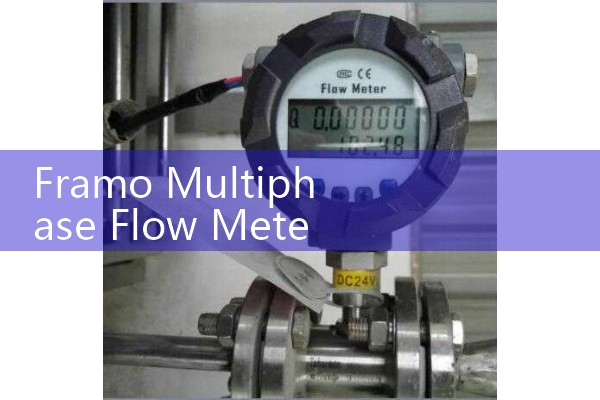
Oval gear meters and electromagnetic meters are not suitable for air. They are for liquids. Do not use them on gas lines.
Pipe Size and Mounting Matter More Than Unit Accuracy
DN15, DN25, DN50, and DN80 are common air line sizes. The flow span in each pipe size depends on pressure. A thermal mass flow meter for DN25 may cover 0.5 to 100 Nm3/h in normal conditions. The same meter on a DN50 line might need a reduced bore section or a different probe length. For compressed air at 7 bar and a flow of 50 CFM, DN15 or DN20 is usually enough. For 500 CFM at 7 bar, you might need DN50 or DN80 depending on velocity.
In practice, we ask for the minimum and maximum flow rate, not just one design point. This matters for turndown. A vortex flow meter has a minimum measurable flow. If your plant runs at 5 percent of full flow at night, a DN80 vortex meter may not pick up that small flow. A thermal mass flow meter with 100 to 1 turndown may be a better choice.
Country and Industry Notes
In Southeast Asia, many plants use Nm3/h because the equipment comes from Europe or Japan. In the Philippines and parts of the Middle East, SCFM still appears on US origin compressors. In Australia, m3/h and Nm3/h are common. LPH appears on small dosing systems and pilot gas lines in all regions.
Desalination plants in Oman and Saudi Arabia often buy air flow meters for pneumatic panel air. Food and beverage plants in Thailand and Indonesia buy compressed air flow meters to track energy use. Paint manufacturers in Malaysia use airflow meters on fume extraction lines with solvent resistant materials. Marine yards in Vietnam measure engine room ventilation air with insertion thermal probes.
Silver Instruments Recommended Models
For compressed air and gas flow, Silver Instruments supplies thermal mass flow meters with inline or insertion mounting. Outputs include 4-20 mA, pulse, and RS485. We can configure the display in CFM, SCFM, Nm3/h, kg/h, or LPH. For saturated air with moisture, a vortex flow meter may be more rugged. We supply vortex flow meters from DN15 to DN200 with integrated pressure and temperature compensation when standard flow is required.
Need a quote? Send us your gas type, flow range, pressure in bar, temperature in degrees Celsius, and pipe size in DN. We will return a model selection and price. Tel: +86-25-68650347. Whatsapp: +86-25-52155837. WeChat: +86 15365082610.
FAQ
What is the difference between CFM and SCFM?
CFM is flow at actual pressure and temperature. SCFM is flow corrected to a standard condition like 14.7 psia and 68 degrees Fahrenheit. SCFM is useful for comparing gas quantity. CFM is useful for sizing the meter on a real pipe.
Can I use LPH for compressed air measurement?
Yes but only for small flow lines. For industrial compressed air, LPH gives large numbers and m3/h or SCFM is more practical.
Does Silver Instruments sell air flow meters for hazardous areas?
Yes. We can supply thermal mass flow meters and vortex flow meters with ATEX Zone 1 or Zone 2 approvals for gas and compressed air service in oil and gas plants.
What is turndown and why does it matter for air meters?
Turndown is the ratio between maximum and minimum measurable flow. A 100 to 1 turndown thermal mass meter can read from 1 to 100 Nm3/h. A vortex meter may only read from 10 to 100 Nm3/h on the same line.
How do I send an inquiry for an air flow meter?
Send gas type, pipe size in DN, minimum and maximum flow rate, pressure in bar, temperature in degrees Celsius, and output signal requirement. Contact Silver Instruments by phone at +86-25-68650347 or by Whatsapp at +86-25-52155837.