

 Current position > Product detail
『Fuel Gas Flow Meter Systems: Sizing Vortex and Ultrasonic Custody Transfer Meters for Industrial Boilers』Related information(clamp on meter|electromagnetic meter|venturi meterrotameter|orifice meter|ultrasonic flow meter|mass flow meter|coriolis mass flow meter|coriolis flow meter|magnetic flow meter|magmeter flow meter|magflow flow meter|mag meter flow meter|electromagnetic flow meter|vortex flow meter|turbine flow meter|thermal mass flow meter|thermal flow meter|rotameter flow meter)
Fuel Gas Flow Meter Systems: Sizing Vortex and Ultrasonic Custody Transfer Meters for Industrial Boilers
Quick Answer
For industrial boiler fuel gas, sizing starts with actual flow range, gas type, pressure, and temperature. Silver Automation Instruments recommends a multivariable vortex meter for DN50 to DN300 internal boiler gas lines and an ultrasonic meter for custody transfer on supplier billing points. Do not size only by line size. Check minimum and maximum velocity before you order.
Many plant engineers match the meter size to the pipe. That works sometimes but it fails at low fire. A natural gas boiler feeding a 10 t/h steam load may swing from 350 Nm3/h to 2,800 Nm3/h. A DN100 meter sized for full load can lose the signal at low fire because the velocity drops too low. Sizing is about turndown, not just nominal diameter.
Silver Automation Instruments has supplied vortex and ultrasonic fuel gas meters to boiler plants in Vietnam, Indonesia, Nigeria, Mexico, and Saudi Arabia. We see two common tasks. One is burner control and internal fuel gas accounting. The other is custody transfer or site-wide gas allocation. The first task usually fits a vortex meter. The second usually fits an ultrasonic meter.
Fuel Gas Meter Sizing Basics for Boilers
You need five values to size a fuel gas meter. Gas composition, minimum flow, maximum flow, operating pressure, and operating temperature. Natural gas at 6 bar and 25 degrees Celsius has a different density from the same gas at 0.8 bar. The density changes the velocity at a given pipe size. The meter is measuring velocity and converting it to a standard volume.
Here is the thing. Minimum flow causes most field failures. We have seen this on customer sites many times. The meter is a DN100 because the pipe is DN100. At low fire the gas velocity drops below 3 m/s. The vortex meter output freezes. The ultrasonic meter may become unstable. The fix is often a smaller meter size. For a fuel gas line at 10 bar and a flow range of 120 to 2,000 Nm3/h, a DN80 meter is often better than a DN100. It raises velocity at the low end. Check pressure drop at the high end before deciding.
Vortex Flow Meter Sizing for Fuel Gas
Vortex meters work well on natural gas, LPG, coke oven gas, and biogas if the gas is clean and the Reynolds number is above 20,000. The Silver VX-80G multivariable vortex flow meter has a built-in PT100 temperature sensor and a pressure sensor. It outputs compensated gas flow in Nm3/h or kg/h over 4-20 mA HART. Standard sizes for boiler fuel gas are DN50, DN80, DN100, and DN150. Accuracy is plus or minus 1.0 percent of reading above 20 percent of flow range.
Order the meter with a pressure range that covers the fuel gas supply. For most industrial boilers this is 10 bar or 16 bar. Process connections are usually ANSI 150 or PN16. Wetted parts in 316L stainless steel are common. If the gas contains hydrogen sulfide or water vapor, tell the supplier the full composition. Do not assume the standard gasket and sensor body are suitable.
Straight run matters. Use 15D upstream and 5D downstream after a single elbow. After a control valve or a partially open valve, use 30D or install a flow conditioner. A paint manufacturer in Southeast Asia had unstable gas readings on a DN150 vortex meter. The cause was a butterfly valve only 8D upstream. Moving the meter to a longer spool solved the problem.
Ultrasonic Custody Transfer Meter Sizing for Fuel Gas
For supplier billing or large boiler headers, an ultrasonic custody transfer meter is the normal choice. The Silver UG-200C ultrasonic gas flow meter comes in two path and four path versions from DN80 to DN400. It follows AGA 9 and ISO 17089 test methods. Pressure and temperature inputs allow the meter to output standard volume. A pulse output or Modbus RTU signal connects to a flow computer or PLC.
Ultrasonic meters need enough gas velocity for a stable transit time measurement. A four path meter wo
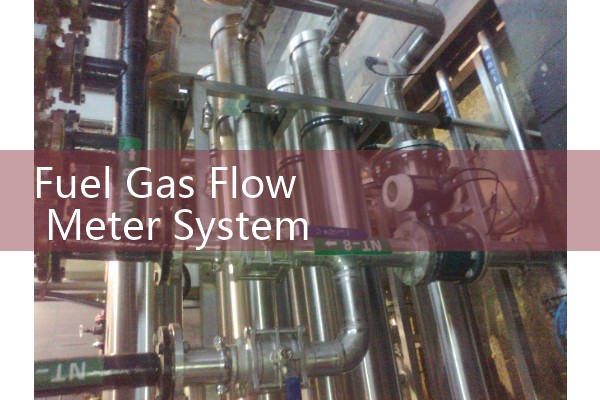
Last year a customer in Vietnam asked us about a natural gas totalizer for three boilers. The line was DN200 with a flow range of 300 to 5,000 Nm3/h and operating pressure 5 bar. A DN200 ultrasonic meter would run at 1.1 m/s at minimum flow. That is below the stable range. We recommended a DN150 Silver UG-200C with reducers. Pressure drop at 5,000 Nm3/h was about 120 mbar. The meter now reads steadily from low fire to full load.
Which Meter Type to Choose
For internal boiler air fuel ratio control and local fuel gas accounting, a multivariable vortex meter is usually enough. It costs less and reacts quickly. For supplier billing, plant-wide allocation, or intercompany transfer, use an ultrasonic custody transfer meter. In some countries a calibrated vortex meter is accepted for small industrial boilers below 10,000 Nm3/h per month. Check local metering rules before you buy.
As a rough field guide, a DN50 to DN100 vortex meter fits package boiler fuel gas flows from 80 to 1,200 Nm3/h. A DN100 to DN200 ultrasonic meter fits 1,000 to 8,000 Nm3/h. If the turndown is wider than 20 to 1, size for minimum flow and then verify the maximum pressure drop. That order avoids the most common sizing error.
Recommended Model Pairings from Silver Instruments
For a 10 t/h steam boiler on natural gas at 6 bar with a flow range of 150 to 1,500 Nm3/h, the Silver VX-80G DN80 multivariable vortex meter is a practical fit. For a 25 t/h boiler or a common header feeding three boilers with a flow range of 400 to 6,000 Nm3/h, the Silver UG-200C DN150 ultrasonic meter gives custody transfer level repeatability. Both devices output 4-20 mA HART. The ultrasonic meter also has Modbus RTU.
As a flow meter manufacturer and supplier, Silver Automation Instruments can provide a sizing sheet and a price quote. Visit flow-meter.com.au for product data sheets. Send us your pressure in bar, temperature in Celsius, pipe size in DN, and flow range. Also include gas composition and local approval needs. Contact Silver Automation Instruments at Tel: +86-25-68650347. For faster response use Whatsapp: +86-25-52155837 or WeChat: +86 15365082610.
FAQ
Can a vortex flow meter be used for custody transfer on a boiler fuel gas line?
In most countries a standard vortex meter is not accepted for high value custody transfer. It can be accepted for internal allocation or small industrial boiler billing where local rules allow. For supplier billing, an ultrasonic meter is the safer choice.
What gas data is needed to size a fuel gas flow meter?
Gas type, minimum and maximum standard flow rate, operating pressure, operating temperature, pipe size, and required accuracy. Include gas composition if the stream has high nitrogen, carbon dioxide, or hydrogen content.
How much straight run does a vortex flow meter need on fuel gas?
Use 15D upstream and 5D downstream after a single elbow. After a control valve or partially open valve, use 30D or install a flow conditioner. Short straight runs cause unstable readings from valve turbulence.
What is the typical accuracy of an ultrasonic custody transfer gas meter?
A four path ultrasonic gas meter can achieve plus or minus 0.5 percent of reading over a 10 to 1 range. Some systems reach plus or minus 0.3 percent in stable conditions. Ask for an AGA 9 or ISO 17089 calibration report.
Why does my gas flow meter read zero at low fire?
The gas velocity is likely below the meter cutoff. Vortex meters stop reading below about 3 m/s under low pressure. Reduce the meter size, adjust operating pressure, or switch to an ultrasonic meter with better low flow response.