Current position > Product detail
Principle of nozzle flowmeter
『Principle of nozzle flowmeter』Related information(clamp on meter|electromagnetic meter|venturi meterrotameter|orifice meter|ultrasonic flow meter|mass flow meter|coriolis mass flow meter|coriolis flow meter|magnetic flow meter|magmeter flow meter|magflow flow meter|mag meter flow meter|electromagnetic flow meter|vortex flow meter|turbine flow meter|thermal mass flow meter|thermal flow meter|rotameter flow meter)
1.15 Common working principle diagrams of flow meters, intuitive and clear. Flow meters play a key role in industrial production and are closely related to national economy, defense construction, and scientific research. They are crucial for measuring the flow rate of gases, liquids, steam and other media. This article uses an animated demonstration method to visually demonstrate the working principle of flow meters. It introduces 15 commonly used types, including orifice flow meters, electromagnetic flow meters, turbine flow meters, Venturi flow meters, volumetric flow meters, elliptical gear flow meters, rotor flow meters, vortex flow meters, waist wheel flow meters, dual rotor flow meters, target flow meters, ultrasonic flow meters, nozzle flow meters, and Coriolis mass flow meters. Orifice flow meters generate a pressure difference by increasing the flow velocity and static pressure difference through the local contraction of the fluid in the pipeline, and measure the fluid flow rate based on the magnitude of the pressure difference. This method is based on the laws of conservation of energy and continuity of flow. Orifice flow meters have a simple and sturdy structure, are widely used, have no problems of abrasion and fouling, are easy to install, and are suitable for various media. The electromagnetic flowmeter is based on Faradays law of electromagnetic induction, which measures the induced voltage generated when the conductive medium flows through the pipe. The induced voltage is measured through the electrodes at both ends of the pipe to achieve flow measurement. Its characteristics include a bidirectional measurement system, low pressure loss, and not affected by changes in fluid density, viscosity, tempera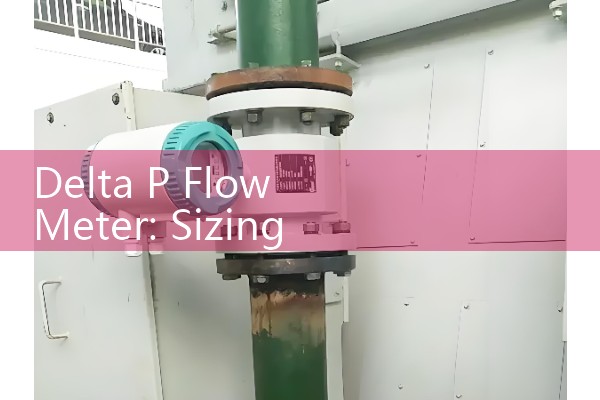 ture, pressure, and conductivity. It is mainly used in sewage treatment. The turbine flowmeter drives the turbine to rotate through fluid flow, converting the rotational speed into electrical pulses to display the flow rate. It has strong anti impurity ability, strong anti electromagnetic interference and vibration ability, simple structure and easy maintenance, no pressure loss, and is suitable for measuring high viscosity liquids. The Venturi flowmeter generates a static pressure difference when the fluid flows through the throttling element in the pipeline, and measures the flow rate based on the magnitude of the pressure difference. The Venturi flowmeter has no erosion or fouling problems, has a certain rectifying effect, and has high measurement accuracy and stability. The volumetric flowmeter calculates the fluid volume by measuring the number of rotations of the rotating components of the flowmeter. Its characteristic is high measurement accuracy, and the installation pipeline conditions have no effect on the measurement accuracy. It is suitable for measuring high viscosity liquids, but the structure is cumbersome and the volume is large, which is not suitable for high and low temperature applications. The elliptical gear flowmeter calculates fluid volume based on the number of gear rotations and is suitable for flow measurement of high viscosity media, but not for fluids containing solid particles. When gas is mixed in the measured liquid, it can also cause measurement errors. The rotor flowmeter balances the torque acting on the rotor through fluid flow, causing the rotor to float stably in the fluid, and calculates the flow rate based on the position of the rotor. Its characteristics include simple and intuitiv
『SILVER Official Website SERVICE』
User:flowgauge99322Last Time:07/03/2026