

 Current position > News detail
『Lubricating Oil Flow Meter 2 Inch Factory Assembly Line Layouts』Related information(clamp on meter|electromagnetic meter|venturi meterrotameter|orifice meter|ultrasonic flow meter|mass flow meter|coriolis mass flow meter|coriolis flow meter|magnetic flow meter|magmeter flow meter|magflow flow meter|mag meter flow meter|electromagnetic flow meter|vortex flow meter|turbine flow meter|thermal mass flow meter|thermal flow meter|rotameter flow meter)
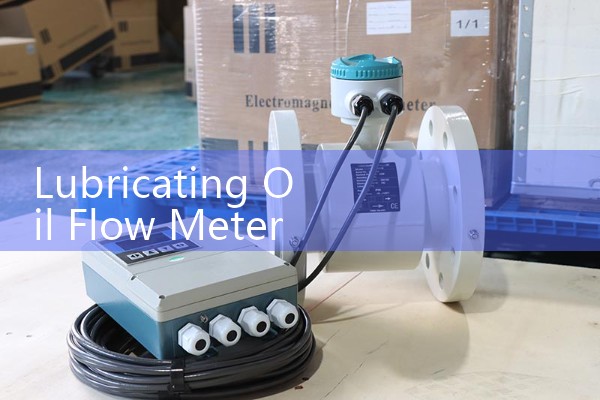
Lubricating Oil Flow Meter 2 Inch Factory Assembly Line Layouts
Quick Answer: For lubricating oil filling, dosing and batch control on factory assembly lines, a 2-inch (DN50) oval gear flow meter gives repeatable accuracy across viscosities from 10 cP to 1,000 cP. Silver Automation Instruments supplies these meters with pulse or 4-20 mA HART outputs that feed directly into PLCs and dosing controllers. A proper layout includes a strainer, vertical mounting in a bypass loop, and short straight pipe runs to avoid air pockets and measurement drift.
Why Oval Gear Meters for Lube Oil Lines
Lubricating oil measurement punishes flow meters that depend on flow profile. Engine oils, gear oils and hydraulic oils move from ISO VG 32 to ISO VG 460 and above, and viscosity changes with every degree of temperature drop. In a motorcycle engine assembly plant in Vietnam we visited, operators fill 0.8 L of SAE 10W-40 into each crankcase. A turbine meter would drift as the oil warms from 25 °C to 40 °C during the shift. An oval gear meter does not care. Two precision-cut oval rotors sweep a fixed volume per pocket, so the output is a direct mechanical displacement. Accuracy holds at ±0.5% of reading for viscosities above 20 cP, and the meter delivers a clean pulse train for every 0.01 L.
Here is the thing. Most engineers skip the viscosity compensation step, but an oval gear meter removes that need. You do not get the slip errors that creep in with turbine or orifice devices. Because the meter body can be cast iron or stainless steel, it fits common lube oil temperatures up to 120 °C and pressures to 40 bar. This makes the 2-inch model a plug-and-play choice for assembly line batching stations.
2-Inch Flow Meter On Your Assembly Line
A 2-inch oval gear meter mounts directly into the fill line between the supply pump and the fill nozzle. On a typical line filling 1 L to 5 L bottles of engine oil, a DN50 meter running at 20 to 60 L/min hits batch targets within 30 mL. For 200 L drum filling, the same meter can run up to 120 L/min with a high-flow cut-off valve. The meter body sits vertically, flow direction upward, so any small solids settle away from the rotors and air bubbles rise through. A Y-type strainer with a 60-mesh screen goes right before the meter. We have seen customers skip this strainer, then call us because bearing wear ruined a batch controller. In practice, a strainer and a simple air eliminator double the meter service interval.
Many assembly lines use a bypass loop so the meter can be isolated without stopping the pump. You install a three-way valve to switch between meter and bypass. This layout helps during cleaning and calibration. The pulse output (100 pulses per litre on many models) goes to a PLC or a batch controller. The controller opens a two-stage solenoid valve: fast fill to 90% of target, then slow drip to final volume. That cycle repeats every 12 seconds on a busy line in a Thai lubricant bottling plant we support.
Layout Considerations: Piping and Mounting
Mechanical displacement meters do not need long straight runs. A straight section of 3 to 5 pipe diameters upstream and 2 diameters downstream is enough. However, you need solid pipe supports because a 2-inch iron meter can weigh 18 kg. We often specify a stainless steel mounting bracket bolted to the frame. The meter flange pattern is normally DN50 PN16 or ANSI 2-inch 150 lb, so it bolts directly to standard process piping.
Temperature sensors help when the oil grade changes between batches. A PT100 installed in a thermowell downstream of the meter sends a temperature signal to the batch controller. The controller then compensates volume for thermal expansion. Last year a customer in Saudi Arabia blended gear oil at 45 °C and filled 20 L pails. Without compensation, volume errors reached 0.8% between morning and midday. Adding a PT100 and a simple correction table in the PLC brought the error below 0.1%.
If the line runs in a hazardous area, we supply the meter with ATEX or IECEx certification for Zone 1 and Zone 2. The pulse pickup is intrinsically safe Ex ia, and the 4-20 m
A Real-World Example from Southeast Asia
A lubricant blending plant outside Jakarta runs three parallel filling lines: one for gear oil, one for hydraulic oil, and one for motorcycle engine oil. Each line has a 2-inch oval gear meter from Silver Instruments. The gear oil line handles ISO VG 320 at 35 °C, filling 20 L pails. The meter sits after a heat exchanger, before a two-stage valve. Their batch controller counts 2,000 pulses per 20 L, closes the valve, and the line moves the next pail in under 8 seconds. They replaced a Coriolis meter that worked well but cost too much for multiple lines. The oval gear solution brought the same ±0.5% batch accuracy at a fraction of the capex. Their maintenance team checks the strainer basket every 300 cycles and swaps rotors every 2 years. That schedule has kept the line running with less than 0.2% rejects due to fill volume.
Technical Specifications and How to Select
When you request a quote for a 2-inch lubricating oil flow meter, share these parameters so we can match the meter to your line:
Nominal diameter: DN50 (2-inch) with cast iron or 316 stainless steel body. Viscosity range: 10 cP to 1,000 cP (higher on request). Flow range: 5 to 120 L/min, with best accuracy between 10 and 80 L/min. Operating pressure: up to 40 bar standard. Output options: pulse (NPN/PNP, push-pull), 4-20 mA, HART, or RS485 Modbus. Temperature sensor: optional integrated PT100 for volume correction. Certifications: ATEX, IECEx, CE, and local approvals for Australia, Middle East and Latin America.
Most engineers start with the pulse output because it is the simplest to integrate into a PLC high-speed counter. If you need remote monitoring, add the HART module. We ship the meter calibrated for your oil type. Our test bench uses actual lubricating oil, not water, so the K-factor matches real operating conditions.
FAQ: 5 Questions About 2-Inch Lube Oil Meters
Can a single 2-inch oval gear meter handle multiple oil viscosities on the same line? Yes. The measuring chamber clearance is designed for a wide viscosity band. We always ask for the lowest and highest viscosity in your process to confirm the meter still meets the required accuracy. If the range is extreme, we may adjust the rotor clearance at the factory.
What is the typical accuracy of a 2-inch lubricating oil flow meter? With our OGM series, you can expect ±0.5% of reading for viscosities above 20 cP, and ±1% for lower viscosities, provided the flow is steady and free of air bubbles. Field repeatability is often better than 0.2%.
Do I need straight pipe runs before the meter? Oval gear meters do not need long straight runs. A short section of 3 to 5 pipe diameters upstream is enough. However, we strongly recommend a strainer and an air eliminator in the line. Those two accessories do more for accuracy than extra pipe length.
Can the meter be used in ATEX Zone 1 areas? We supply explosion-proof versions certified for ATEX and IECEx Zone 1 and Zone 2. Specify your zone classification and gas group when you request a quote. The pulse pickup and the 4-20 mA electronics each carry their own Ex ia approval.
How do I integrate the meter with a PLC for automatic batching? The meter sends a pulse output, often 100 pulses per litre. Your PLC counter accumulates pulses until the preset batch volume is reached, then triggers a shut-off valve. For simple setups, you can use a local batch controller we supply, pre-configured for your meter and valve.
Get a layout drawing and a firm quote: Send us your oil type, viscosity (cP), temperature (°C), flow range (L/min), and pipe size (DN) to [email protected]. Our engineers will return a dimensional drawing, a suggested assembly line layout, and pricing within one working day. Just tell us the fill volume target and the cycle time you need.